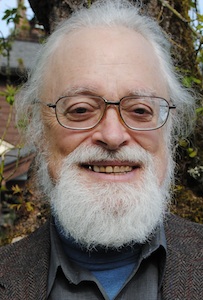
























Tom Atlee: A brief biograpy
Ideas and FocusTom Atlee is vice president and research director of the Co-Intelligence Institute, a nonprofit organization he founded in 1996. His early co-intelligence research in the late 1980s focused on the relationship between group dynamics and collective intelligence. Beginning in the mid-1990s through the mid-2000s, his focus shifted to developing society's capacity to function as a wise democracy. From 2005-2010 he explored possibilities for the conscious evolution of social systems, grounded in a sacred science-based understanding of evolutionary dynamics. During 2011-2015 he focused on public wisdom, co-intelligent economics and participatory sustainability. Seeking more practice-based ways to engage people around the idea of wise democracy, he is now doing courses and developing a community of practice around the wise democracy pattern language. He hopes these intertwined, expanding explorations can help channel the energies surrounding our 21st century social and environmental crises into positive possibiities and system-transforming initiatives. Tom's social change vision is grounded most deeply in new understandings of evolving wholeness which recognize the value of diversity, unity, relationship, context, uniqueness and the spirit inside each of us and the world. Co-intelligence is intelligence that arises from that kind of wholeness. It has collaborative and collective dimensions, and intrinsic interconnectedness which we see clearly in wholesome forms of politics, governance and economics. Co-intelligence theory also highlights the many facets of intelligence (like head and heart), wisdom, and the higher forms of intelligence (natural and sacred) that move through and beyond us. Although Tom and the Institute focus on very practical issues of group, social, political, and economic dynamics, co-intelligence has many esoteric dimensions as well. An early theoretician and advocate of collective intelligence, Tom's inclusive mapping of the field has been featured in two major books on the subject - Mark Tovey's Collective Intelligence: Creating a Prosperous World at Peace (2008) and Nasreen Taher's Collective Intelligence: An Introduction (2006). His work on "wise democracy" features his coined category of existing forms of "citizen deliberative councils" which he promotes in his books The Tao of Democracy: Using Co-Intelligence to Create a World that Works for All (2003) and Empowering Public Wisdom: A Practical Vision of Citizen-Led Politics (2012). He has been a significant theoretician in the field of dialogue and deliberation, being lead integrator of the Core Principles of Public Engagement (2009) and a major contributor to the GroupWorks pattern language of group process (2008-2012), as well as a steering committee member of the National Coalition for Dialogue and Deliberation (2002-2005). Much of his work features new visions of social change agentry - from the co-intelligent activism articulated in his books Participatory Sustainability,The Tao of Democracy and Reflections on Evolutionary Activism: Essays, Poems and Prayers from an Emerging Field of Sacred Social Change (2009), to his co-organizing of the Evolutionary Salon on Philanthropy (2006) and the Storyfield Conference (2007) to his many blog posts on social issues and action. In addition to his books, blogs and websites, Tom has published extensively in alternative journals and publishes a newsletter featuring significant articles and websites by other commentators, as well as his own writings. He has also worked with a number of other leading authors on their books. 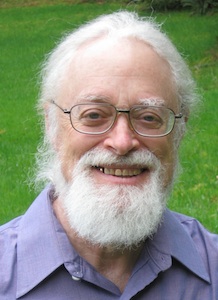
Background: The 1990sIn the early 1990s Tom did community-building work in Belize and promoted green alternatives for the Czechoslovakian Environmental Ministry. He organized an extensive dialogue on "societal intelligence" with economist Robert Theobald and other leading thinkers. He co-hosted ongoing twice-monthly salons of San Francisco Bay Area readers of In Context [a journal of sustainable culture], Yes! magazine [a journal of positive futures] and Utne Reader which met for many years - as well as a regular weekly meeting of Bohm Dialogue practitioners from 1991-1993. He was active for six years in Oakland, CA's Center for Group Learning. From 1989-1994 he edited and published Thinkpeace, a national journal of peacemaking strategy and philosophy (for which he had written a regular column for three years prior to becoming editor).. 1986: A WatershedTom's life was changed by his experiences on The Great Peace March of 1986 -- an idealistic mobile community which began its cross-country trek in LA with 1200 people, only to go bankrupt two weeks later in the Mojave desert. 800 marchers left and 400 stayed -- with few resources and no formal organization. Tom was an active participant in the swirl of emerging leadership, conversation and initiative that resulted in the March soon continuing as a grassroots bootstrap operation, arriving on schedule in Washington, DC, eight months later. During that time he had his first vivid experiences of collective intelligence and self-organizing human systems. Intense relationship work done at that time further added to his understanding of human interactions, transformation and community. During the Peace March Tom and his late partner
Karen Mercer published the official "Peace March Update,"
providing March supporters with news of the March. Tom helped establish
the March's communications center and, as the March came to a close,
organized networking for marchers to work together after the March. Early Years -- Learning nonviolent social changeTom was raised in an activist, intellectual, Quaker family with a socialist economist father and a mother interested in Eastern spirituality, evolution and social service (she worked for Planned Parenthood in the 1960s and then the National Council on Aging). After studying the relationship between mysticism and modern physics for almost 3 years, he left Antioch College in 1968 to organize draft resistance to the Vietnam War. In 1969 he married and a year later joined the core group of a large spiritual community where, in 1976, he and his wife had a daughter, Jennifer, who is now a green building professional in New England. When he left that community in 1982 with his family, his concerns about nuclear war led him back to the peace movement. During the mid-80's he attempted to build bridges among antagonistic peace groups, began editing and writing for local peace publications, and ran the peace desk for the Mondale-Ferrarro presidential campaign in Boston. Around that time, he also became a student of feminism, holism and the ecological perspective. These forces, concerns and ideas have shaped his life ever since, emerging in new forms as his thinking and experience have evolved.
Contents copyright © 2003-2017, all rights reserved, with generous permissions policy (see Legal Notices) |